
Project 01 · Bachelor’s Graduation Project · Individual · June 2026
AI-Based Skin Cancer Detection Using Deep Learning and Dermoscopic Imaging
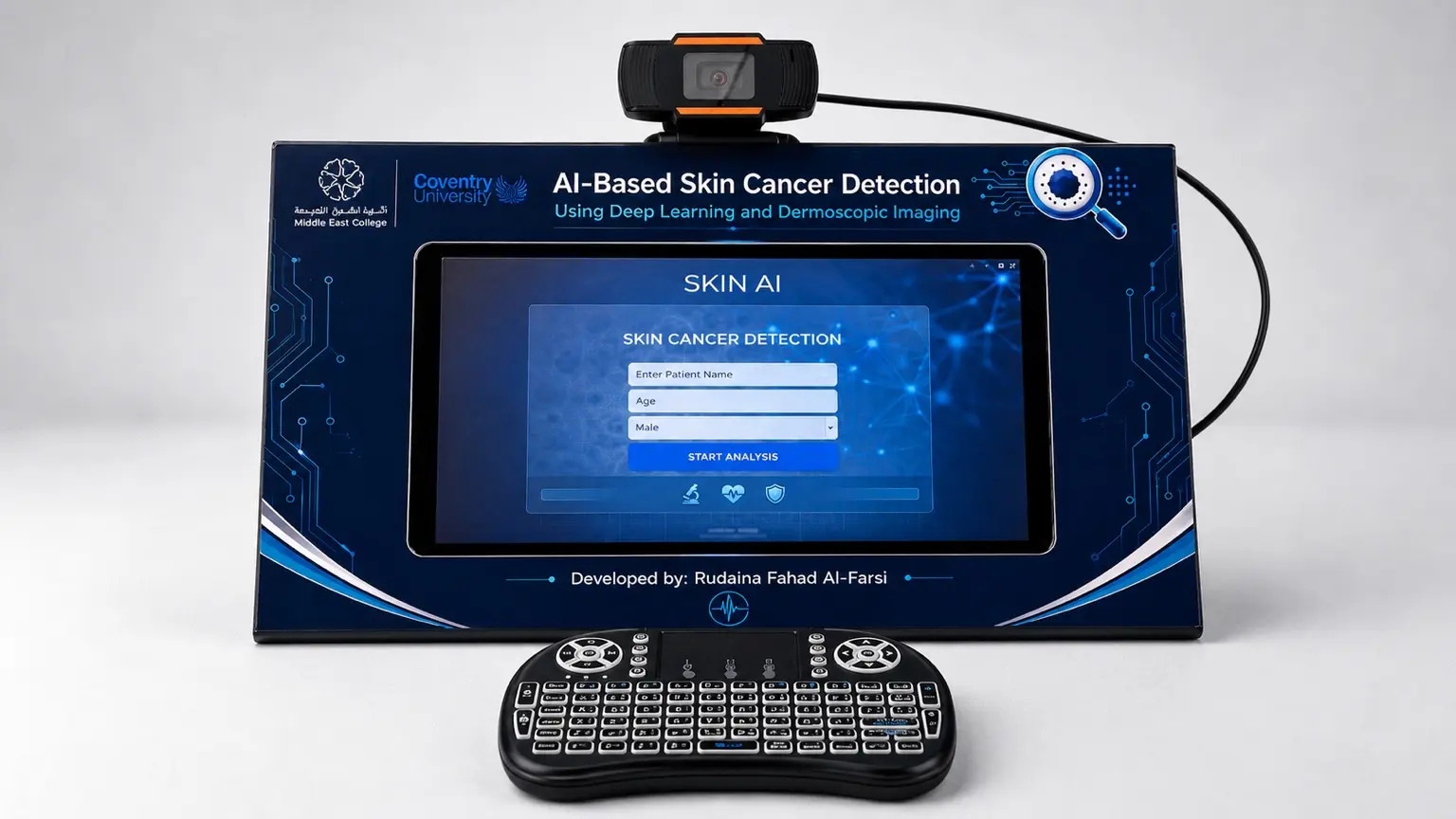
An embedded artificial-intelligence prototype for preliminary dermoscopic image screening support, deployed locally on an Orange Pi 4 Pro.
Problem
Access to specialist screening can be limited in remote areas. This academic project explored whether a portable embedded system could provide fast preliminary screening support while keeping final diagnosis with qualified medical specialists.
Constraints
Individual bachelor’s graduation project using an Orange Pi 4 Pro, a USB camera, a 7-inch display and a locally deployed TensorFlow Lite model. The work was an academic preliminary-screening prototype, not a clinical diagnostic system.
My specific contribution
Designed and implemented as an individual project, including data preparation, model development, TensorFlow Lite deployment, hardware integration, graphical interface and monitoring integration.
Process
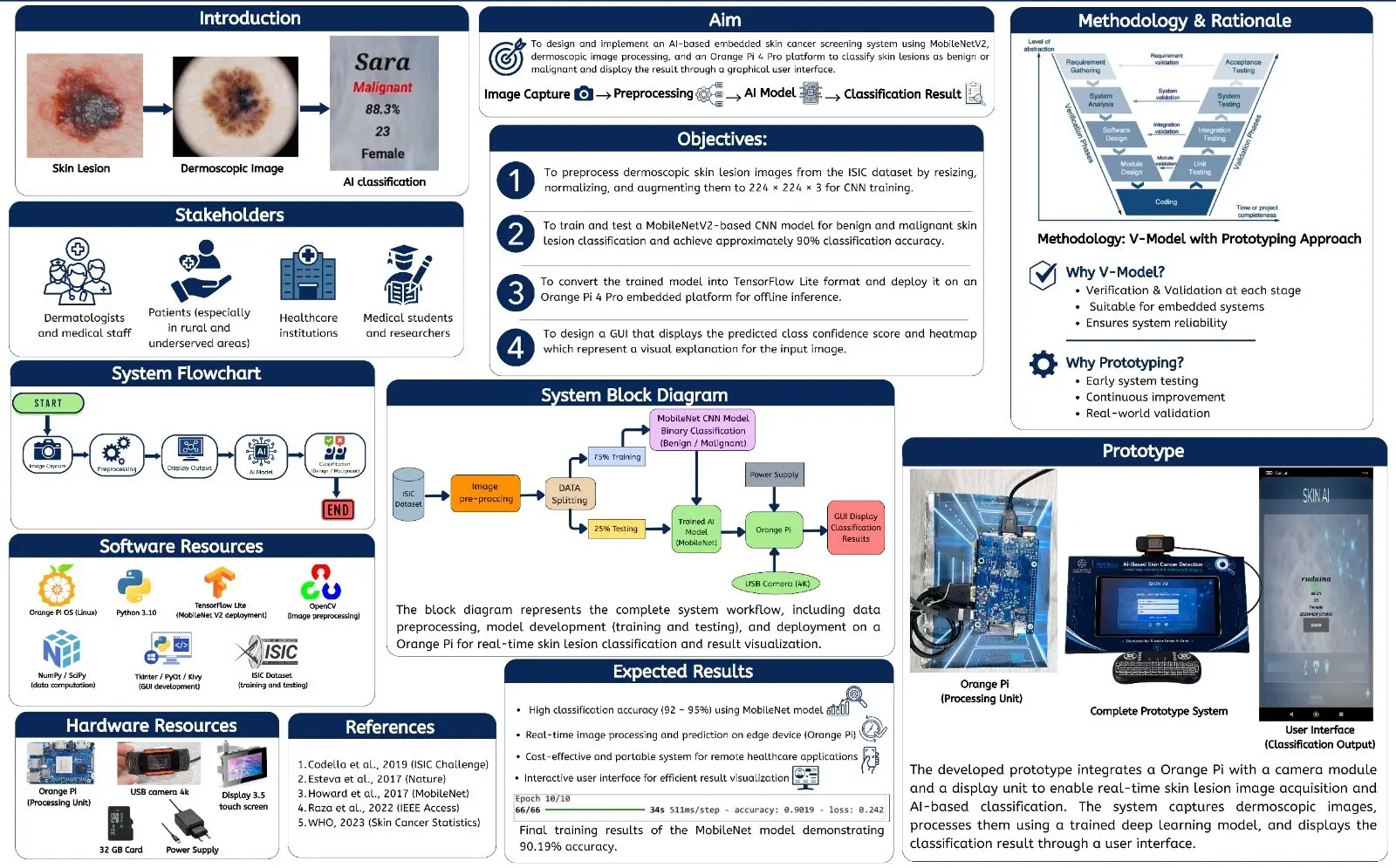
- Selected 7,211 dermoscopic images from the ISIC dataset and used the project-recorded 75% training and 25% combined testing/validation allocation across benign and malignant classes.
- Resized images to 224 × 224 × 3, normalized pixels, and applied rotation, zoom, horizontal flipping and brightness variation for augmentation.
- Fine-tuned the top 20 layers of MobileNetV2 using transfer learning, batch size 32, 25 epochs, Adam optimization and binary cross-entropy.
- Converted the model to Float32 TensorFlow Lite and deployed local offline inference on an Orange Pi 4 Pro with a USB camera, 7-inch HDMI display and PyQt5 interface.
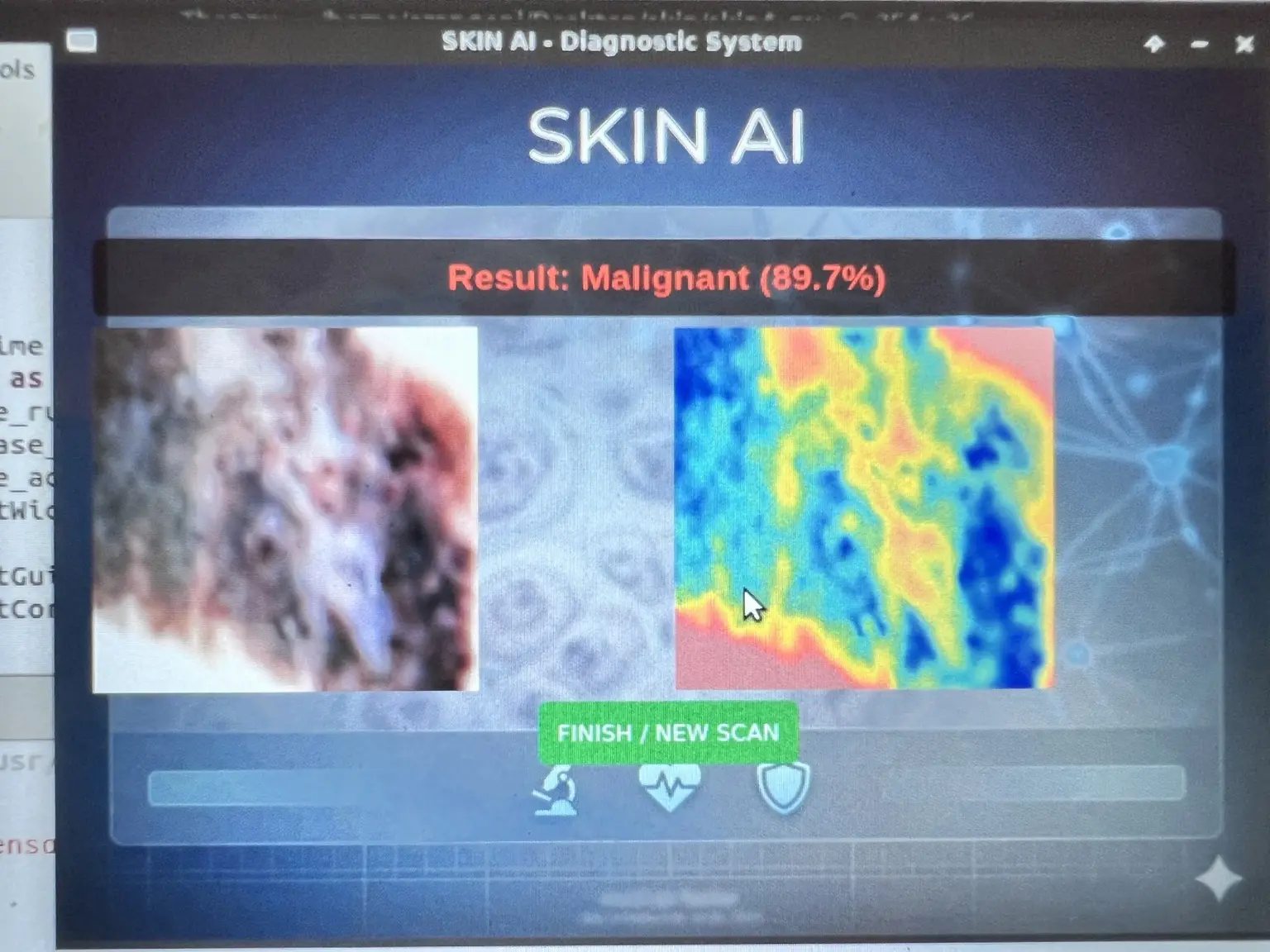
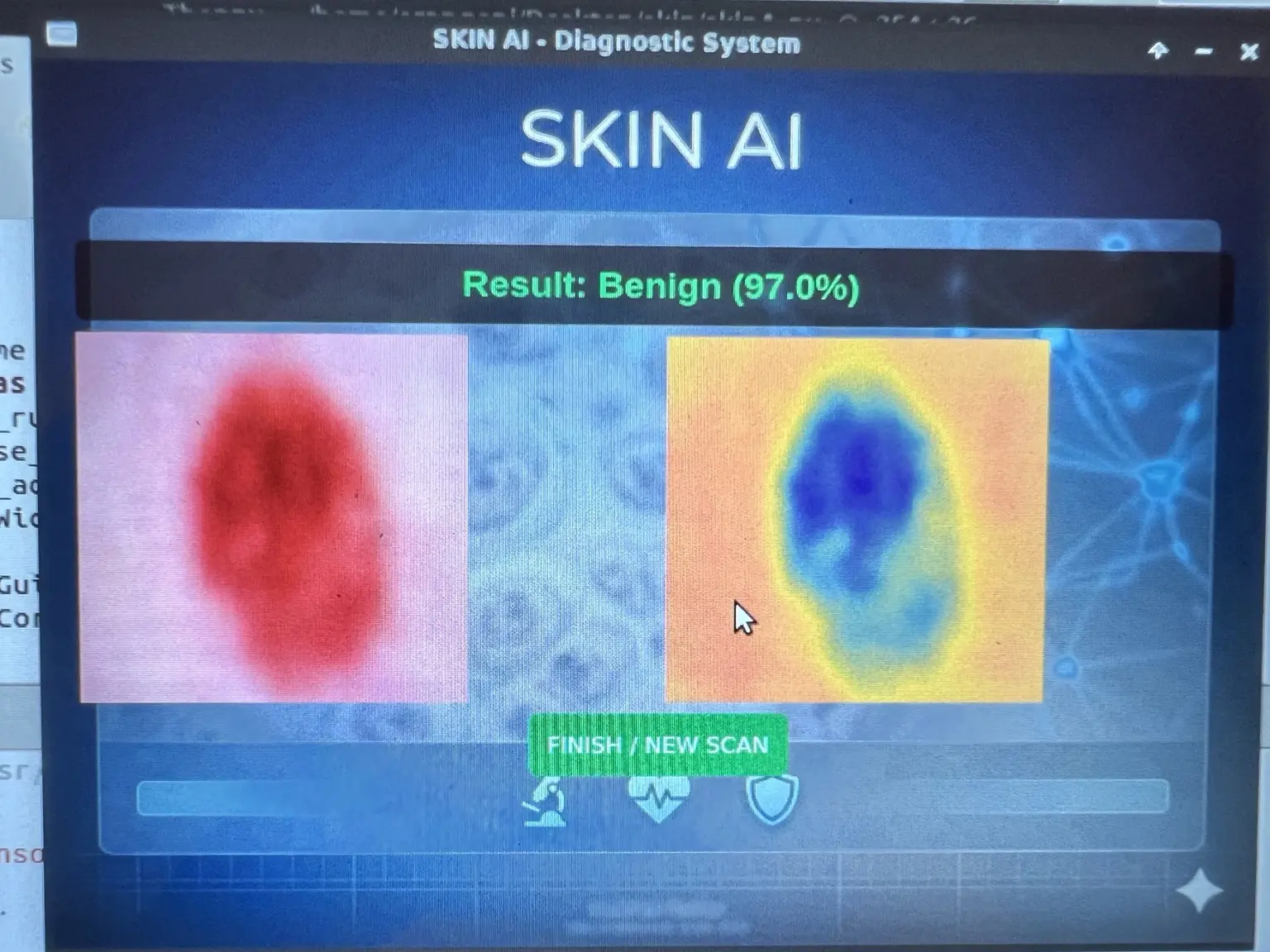
- Displayed prediction, confidence score and a visual heatmap, then integrated Firebase Realtime Database and an Android application for organized monitoring results.
What went wrong and how it was fixed
The project initially explored EfficientNet, but its training requirements exceeded the available computing resources and caused unstable training runs. I selected MobileNetV2 with transfer learning to achieve a more practical balance between classification performance, training feasibility and deployment on the Orange Pi 4 Pro. During physical-device testing, camera focus, lighting variation and embedded-device constraints also contributed to a small difference between simulation and hardware accuracy. I tested the full capture-to-prediction workflow on the device and documented controlled lighting and a dermoscopic lens as future improvements.
Result
The final evaluation achieved 90.43% software evaluation accuracy, 89.92% hardware accuracy and 248 ms Orange Pi inference latency. The project received the Best Project Poster Award in Spring 2026. It supports local AI inference without internet; this prototype does not replace dermatologist diagnosis, clinical examination or biopsy.
Reflection
The work demonstrated the practical trade-off between model performance and embedded deployment constraints. Accuracy is reported because it is the verified metric available in the final project record; class-level precision, recall, specificity, F1-score and ROC-AUC are not claimed here. Future work should use a clearly separated validation and test protocol, a larger balanced clinical dataset, controlled lighting and specialist-led validation.
Image gallery
Project repository
Explore the source files
The public repository includes the available project documentation, source material and supporting files.
View source code on GitHub